There are many sports in Japan. The main ones are sumo wrestling, judo and kendo. They are all very popular in Japan. Baseball is a major sport in Japan. There are 12 professional baseball teams. Six teams are in the central league and six in the pacific league. Both teams play at least 140 games each season and at the end two winning teams meet in the Japan series.
Martial arts
The most popular sports in Japan are Judo, Kendo and Aikido. Men came from a local judo club to teach us some judo. It was a lot like wrestling. They taught us that judo is one of the most popular sports in Japan and that judo means 'gentle way.' We had to say 'Hajime' at the start. It means 'begin.'
Sumo wrestling
Is the national sport in Japan and it has been around for more 1,000 years. A sumo wrestler has to weigh between 100-200 grams and their hair is styled as an ancient warrior. Rikishi is the Japanese for sumo wrestler. The aim of sumo wrestling is to make his Aponte touch the ground before you. There are more than 80 ways to win!
Showing posts with label pageculture. Show all posts
25/03/2010
22/03/2010
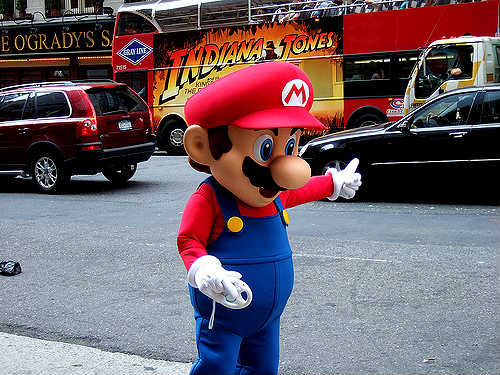
A Short History of Mario!
Through the years, there have been many games like Mega Man and
Contra. But there has been one game that has made loads of new games
and that game is Super Mario. Mario’s first appearance was in Donkey
Kong from 1981 and then made an extremely big game called Super Mario
World. Then Mario got a big brother named Luigi in Super Mario Bros and
what some people do not know is that Princess Peach was originally named
Pauline in Donkey Kong and was also named Princess Toad Stool.
Worst Mario Game and Movie
Throughout the ages of Super Mario, there has been a lame Mario
game called Super Mario 2. In that game, you have a choice of
characters which are Mario, Luigi, Princess Peach and a mushroom called
Toad. Now. I know what your thinking. How could this be a lousy Mario
Game? Well in this game the main enemies are Shy Guys, Ba Bombs and the
main villain is a giant toad named Wart, but did you also know that a
game called Okey Dokey Panic had actually the same version of Super
Mario 2! They also made a Super Mario Bros movie which was the
biggest rip off since Mortal Combat, because in the movie we don’t get
to see the Mushroom Kingdom and the fact is that the Koopa Family look
like stupid little bugs! So all I have to say is that these two Mario
versions are big rip offs!
Large Amount of Mario Characters!
Through the years Nintendo has introduced new Mario characters,
here are some of them:
• Wario and Waluigi, Mario and Luigi’s evil rivals
• Petey Piranha, a big mutated plant with sharp jaws
• Bowser Jr, Bowser’s son!
Names of the Mario Games [1981 – 2009]
Through the ages, there have been loads of names for Mario
games, like :
• Donkey Kong
• Donkey Kong Jr
• Super Mario World
• Super Mario Bros.
• Mario Is Missing
• Mario’s Time Machine
• Smash Brothers Brawl
• Super Mario Sunshine
• Super Mario Galaxy
• Super Mario 2
• Super Mario 3
• Super Mario All Stars
• Mario 64
• New Super Mario Bros Wii
• Warning; the order of these games are random!
GOODBYE!!! (From Nintendo and Mario!)
21/03/2010
Food
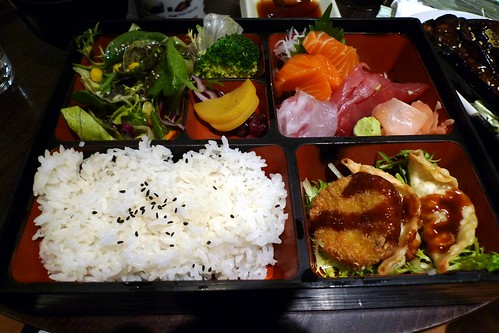
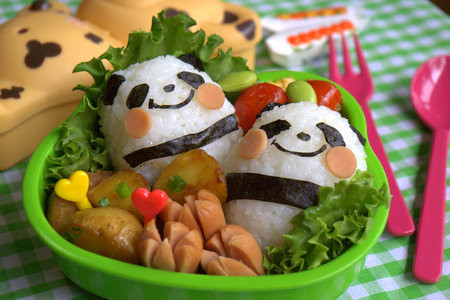
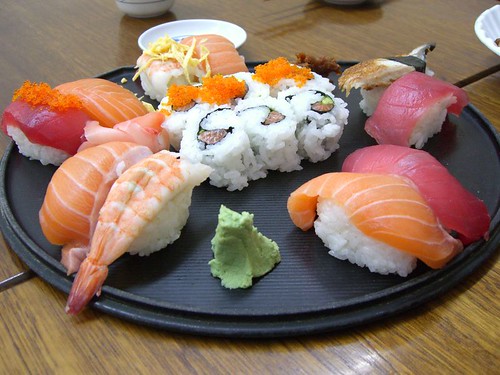
The Japanese word for meal is gohan. Gohan actually means 'steamed rice' but the Japanese use it so much that it is part of almost every meal! Some of the foods they like to eat are sushi, which is raw fish rolled up in a seaweed wrap, sashimi, which is raw fish and vegetables, rice, okonomiyaki, which is a pancake filled with many different ingredients, (okonomi means as you like and yaki means fried so it makes as you like it fried) soba and udon noodles. Japanese also like miso soup and they are very keen on deserts they call wagashi. They eat sweet pancakes a lot and they sometimes shape some of the icing into traditional Japanese characters. Japanese children take things called bento boxes to school instead of lunchboxes. Their parents make their fruit and vegetables shaped like their childs favourite characters like Mario and Luigi.
Japanese bento boxes usually contain: ongiri = rice balls, furikake = dried fish flakes, pickles, curry, sausages, tofu, dumplings, teriyaki, kebabs, sushi and bitesized vegetables and fruit.
Our lunchboxes contain: sandwiches, juice, crisps, fruit, vegetables, chocolate, cheese and salami.
As you can see, the Japanese diet is very different from the British diet and they tend to have a bigger variety than us. Bento boxes are set into different sections for different things usually they are fruit and vegetables, main food and dessert. There are some amazing recipes for Japanese food on http://web-japan.org/kidsweb/cook/index.html
In class, for our Japanese topic we were trying out different Japanese foods, like sushi, wasabi peas, dried cuttlefish and lots of traditional Japanese foods!
Once again our class topic expert, Fai, brought in sushi for us to try and occasionally different dips with mixed soya sauce that they would use in Japan. Our teacher also bought lots of Japanese foods from the different Chinese and Japanese Stores like China town. We loved the wide range of foods that we did manage to grab hold of. Altogether in class we thought that Japanese foods were lovely!
Sushi is raw fish surrounded by sticky rice and rolled in seaweed, or it can just be raw fish rapped in seaweed, so the main ingredients are raw fish and seaweed. Wasabi peas are dried peas with a range of different spices that when you suck feel so, so hot! Dried cuttlefish is just cuttlefish, but dried up. When you eat it it feels all twiggy, as if you’re eating bones, or sticks.
Technology
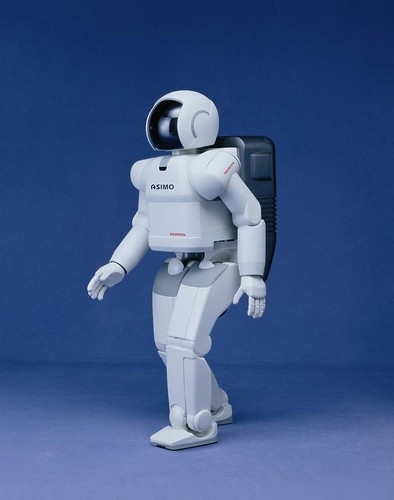
Honda has invented a robot called ASIMO that is made in the form of a human, to help around the factory! ASIMO is a white, with black joints, robot that can run up to 6km per hr and can even ride a bike and dance. WOW! Yamaha is an all around company and it makes a wide range of things from triangles and pianos to motorbikes and trucks! Nintendo, on the other hand, is a game company; it makes consoles and console games. Sony make CD players, cameras, video games, computer monitors, TV monitors, PCs, laptops and more!
A Japanese professor called Professor Arai Kohei, has recently invented a computer system controlled by the users eyes!!! So over all Japanese technology is absolutely amazing!
Religion
Buddhism
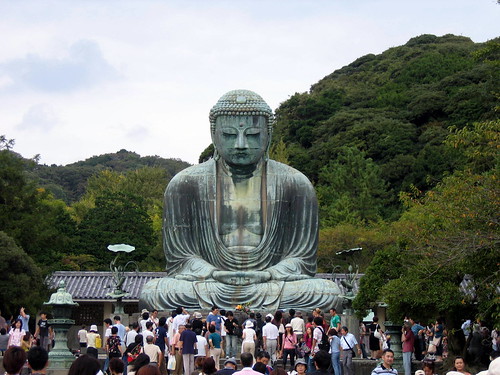
Buddhism is a religion that is strongly followed in Japan, as well as Shintoism. The name “Buddha” means “the enlightened one.” Buddhists follow the teachings of the Buddha, but to not believe him to be one of the gods. The Buddha was born named Siddhatta Gotama in around 580BC in the village of Lumbini in Nepal. He was born a prince, in a rich family. When he was young he had it very easy and he was protected from the harsh realities of sickness, suffering and death
The years went by and Siddhatta married and had a child but was worried about many things. He went outside the royal enclosure where he lived and went to many poor areas. For the first time he saw old age, sickness and death. He also saw a holy man. He made the decision to leave his wife, his baby son and his privileged life and began to search the world to try to find a higher truth or Nirvana, being free from sickness and death.
Siddhatta searched for a truth which would release him from the cycle of dying and rebirth after death. He studied with wise teachers, practiced meditation and lived a life of extreme self-denial and discipline, but still he did not find the answers he needed. The search took Siddhatta six years, but Siddhatta found enlightenment whilst sitting under a bodhi tree. Following this he became known as the Buddha and dedicated his life to spreading his message.
The Buddha came to understand that the answers live in the “Middle Way” living a life which is not luxurious or deprived. Buddhists believe that they can escape the cycle of life and death and reach Nirvana by following the Middle Way through the four Noble Truths of the Eightfold Path.
The Eightfold path is how Buddhists believe people should act, here are some examples. They should have the right understanding (seeing things as they really are not as you think they are,) right thought, right speech, right action, right livelihood, right effort, right mindfulness and right concentration and focus.
Shintoism
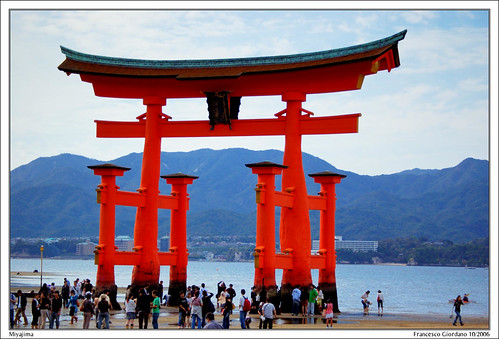
Shinto’s believe in Kami spirits, and that there is a spirit in everything, so, for instance, there is a spirit of the mountain and a spirit of the river. The name came from two Japanese words meaning gods or spirits and a philosophical path or study.
17/03/2010
Homework
We made Japanese food as homework. We had to choose a recipe each from the website kids web Japan. Some people made sushi or sweet potato in the shape of birds and some cool cake that tasted really good.
We looked at Japanese games as well and we tried making our own fuku warai games. Fuku warai is a game where there is a face of a person but it doesn’t have any eyes, nose or mouth they are all on different peaces of cut out squares. Then someone is blindfolded and they have to try and put the pieces of paper in the right place on the face but you might end up looking at something with an eye where a nose should be or a mouth where a eye should be!
We also had to make up our own monsters and write a short story about how they became monsters. Some people's monsters were evil and some were good, some were ugly some were pretty. Some of the stories where about animals that had evolved into something else and some were about robots being built.
16/03/2010
Japanese Names
We chose Japanese boys and girls names for ourselves based on their meaning. Next we searched for images that represented the seasons in Japan. We created posters using Powerpoint and displayed the name labels on our desks. We have made Japanese name tags. We used Powerpoint to add images of Japan and the seasons. We also put our own name in a webpage and it then came up with our names in Japanese calligraphy. We then copied them to our Powerpoint slides and printed them off. We then laminated them and used them as name tags at our desks!
15/03/2010
Kimonos

by parhessiastes At the start of last term, Mr M got kimonos and happy jackets for us to wear in class. There were adult and children kimonos. There were also some colourful happy jackets. Some of the happy jackets had waves or the map of Japan on the back of them. The kimonos were pink, blue or white with a lucky cat pattern on it. The kimonos came in all different colours, sizes and patterns.
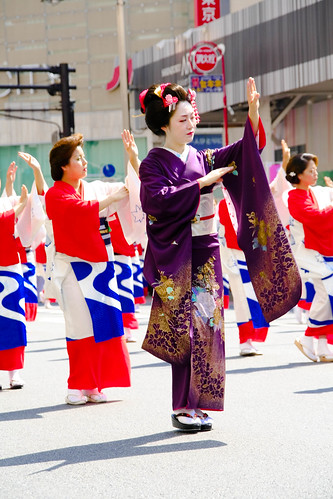
The original meaning for kimono was ‘clothing.’ Now it refers to a piece of traditional clothing. Kimonos were designed to be suitable to wear in all weather. They could also be worn in layers to keep people warm in winter. They were made of linen for the summer. People started to combine different colours in to the design of the kimonos to represent the different seasons of the year. During the Kamakura period (1192- 1338) and the Muromachi period (1338-1573) men and woman started wearing brightly coloured kimonos. Warriors wore the colours of their leaders and sometimes the battlefield was as colourful as a fashion show!
Subscribe to:
Posts (Atom)